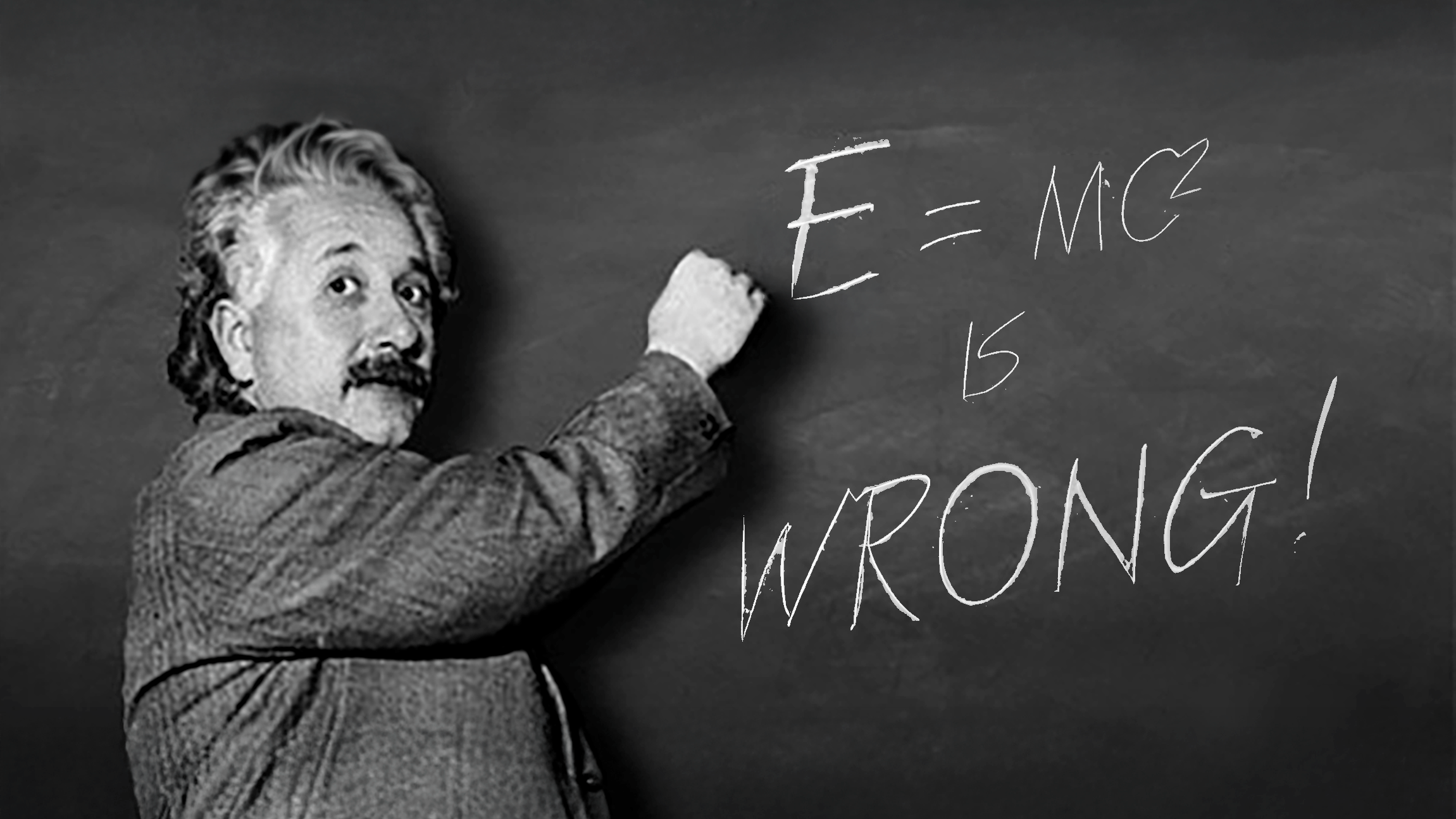
Gravitic Alchemy
Gravitic Alchemy Banner

Category: Einsteinian Critiques

  • Dark Energy Is Acoustics

    Dark Energy Is Acoustics

    How low frequency pressure waves in a rotating plasma medium sustain cosmic structure and eliminate the need for dark energy

    The cosmic web spans billions of light years and displays a precise lattice of filaments, nodes, and voids. This structure has remained coherent since the earliest observable epochs. Any model of the universe must therefore explain why the web does not dissolve, why its geometry remains sharp, and why its boundaries remain stable. Acoustic Gravitic Theory resolves this by identifying the sustaining mechanism described in Genesis: the rotation of the primordial waterfield. A rotating conductive medium naturally produces continuous long wavelength oscillations that propagate through the firmament and maintain its architecture.

    In this interpretation, what modern cosmology calls “dark energy” is not a substance or a repulsive effect. It is the large scale result of low frequency acoustic, magnetosonic, Langmuir, and Alfvénic waves traveling through the intergalactic plasma. These oscillations reinforce the cosmic lattice and create the slow outward adjustment of node spacing that is misinterpreted as acceleration. The structure is therefore not maintained by spacetime expansion but by continuous vibrational input in a rotating medium.

    RELATED: Cymatics and the Cosmic Web
    https://graviticalchemy.com/cymatics-and-the-cosmic-web/

    Eliminating Dark Energy and Restoring Physical Causality

    The idea of dark energy arose because the Big Bang framework had no physical mechanism to explain why distant galaxies show higher redshift than gravity alone would predict. Once cosmology committed to a universe defined by empty space rather than a medium, the interpretation defaulted to stretching spacetime. When redshift patterns appeared to increase with distance, a repulsive influence was added to maintain the model. Dark energy, therefore, serves as a corrective term, not a directly observed phenomenon, and functions primarily to uphold a system that excludes a real physical substrate.

    Acoustic Gravitic Theory removes the need for this corrective term by restoring the medium that Big Bang cosmology discards. Genesis describes the waters that existed before any structure was formed, and AGT interprets the first divine act, “Let there be light”, as the initial cavitation collapse within the primordial deep, a physical event that produced illumination and matter through intense pressure, charge separation, and sonoluminescent release. The next command, “Let there be a firmament in the midst of the waters,” corresponds to the second cavitation event, where God divided the waters and formed the plasma cavity known as the firmament. The surrounding waterfield rotates, and that rotation sustains the long-wavelength oscillations that propagate through the firmament. Once both the medium and the driver are recognized, the effects attributed to dark energy become straightforward manifestations of wave behavior, not evidence for an unseen force.

    RELATED: Waves Carry Force
    https://graviticalchemy.com/waves-carry-force/

    Physical causality requires that interactions arise from real forces acting within a medium, not from geometric abstractions. In a wave-bearing environment, pressure fields, density variations, and magnetic structure influence the movement of matter and the behavior of light. Long-wavelength oscillations in a plasma naturally produce the large-scale organization seen in filaments, voids, and cluster boundaries. Redshift, in this context, reflects the cumulative interaction of light with the firmament rather than recession velocity. The apparent acceleration emerges from the evolution of a driven resonant system, not from a field pushing galaxies apart.

    Reintroducing the medium restores a coherent causal chain. AGT grounds cosmic dynamics in established principles of fluid mechanics and magnetohydrodynamics. Waves originate from the rotating waterfield, propagate through the plasma firmament, and imprint structure across the universe. Every observation used to justify dark energy, including redshift distribution, BAO spacing, and void clarity, aligns naturally with the behavior of a medium responding to continuous oscillatory input. No repulsive field is necessary because the system operates through pressure and resonance, not metric expansion.

    Dark energy is therefore unnecessary. The physical processes responsible for the observed phenomena already exist within the firmament itself. The plasma medium sets the conditions for wave propagation, and the rotation of the waterfield ensures an uninterrupted supply of energy. As long as this rotation continues, the cosmic structure remains organized and predictable according to acoustic principles. The explanatory model becomes simpler, more consistent, and more aligned with both observed plasma behavior and the Genesis creation account.

    The Acoustic Lattice of the Universe

    The universe’s large-scale structure arises from continuous oscillations moving through the plasma firmament established during the second cavitation event. These oscillations channel rotational energy from the waterfield outward, generating long-wavelength modes that organize matter across cosmic distances. Magnetosonic, Alfvénic, Langmuir, and ion acoustic waves collectively shape the framework of filaments, clusters, and voids. The resulting geometry is not the consequence of gravitational collapse but the natural standing-wave pattern of an energized plasma medium.

    Within this pattern, matter settles into regions where the pressure field reaches long-term stability. Acoustic systems consistently draw material toward nodes, while antinodes remain depleted. This creates voids with sharply defined boundaries and filaments that trace regions of sustained pressure minima. The wavelength of the driving oscillations determines the scale of the lattice, and this wavelength is governed by the rotational motion of the waterfield. Because that rotation has remained active since creation, the lattice continues to update and reinforce its structure, providing ongoing coherence without invoking an expanding geometry.

    This wave-based architecture removes the need for dark energy. The phenomena commonly attributed to a repulsive field follow directly from the behavior of a resonant acoustic system. Redshift reflects how light interacts with the medium. BAO signatures indicate present-day resonance rather than frozen remnants of an early universe. Void stability results from persistent pressure gradients, not weakened gravitational influence. The cosmic web behaves as a driven structure because it is one, the product of a physical medium, a continuous rotational driver, and the oscillations that bind them.

    Reinterpreting Dark Energy as Acoustic Expansion

    Modern cosmology links galactic redshift with an accelerating expansion of space, assuming that increasing distance corresponds to galaxies being carried apart by a stretching geometric environment. This interpretation depends on the idea that spacetime itself can expand and act on matter despite having no measurable physical properties. Acoustic Gravitic Theory approaches the same observations differently by focusing on the behavior of waves in an actual material medium. In a universe where structure is supported by a physical substance rather than abstract geometry, redshift no longer needs to be explained through the motion of galaxies or the stretching of space.

    From an AGT standpoint, the separation between large-scale structures is shaped by low-frequency modes moving through the plasma firmament. These modes continually reshape the spacing of the cosmic lattice as energy travels outward from the rotating waterfield. Instead of implying that galaxies are fleeing one another, the observed redshift reflects how light interacts within an active medium. As oscillations travel through the firmament, they modulate both the density and the electromagnetic environment that light encounters, producing a measurable shift without requiring recessional velocity or metric expansion.

    RELATED: Space Time Illusion
    https://graviticalchemy.com/space-time-illusion/

    In this view, dark energy is unnecessary because the phenomenon it was created to explain can be accounted for through standard wave behavior. When a medium carries persistent long-wavelength oscillations, the positions of nodes in that medium adjust in response to ongoing energy input. This outward adjustment is a property of resonance, not a sign of a new cosmic force. Laboratory plasma devices, acoustic chambers, and controlled MHD experiments all demonstrate that a driven system will reorganize its interior structure as energy continues to enter it. The universe behaves according to the same principle.

    Supernova measurements and baryon acoustic oscillation data align with this interpretation. Both record the way matter arranges itself within the pressure field of the firmament, not the rate at which galaxies move apart. As the pressure field evolves, the distribution of matter tracks those changes, producing signals that appear to indicate expansion when viewed through a vacuum-based framework. Under AGT, these observations are the natural consequences of a medium energized by the second cavitation event. The firmament transmits waves, the waves produce pressure contrasts, and those contrasts determine the structure we observe.

    A plasma medium adjusts continually when supplied with fresh input. The cosmic web operates as a large resonant cavity influenced by the waterfield’s rotation, and its gradual restructuring reflects that ongoing interaction. The trend that cosmologists interpret as acceleration is better understood as the behavior of a driven system still moving toward equilibrium. Rather than indicating a mysterious energy source or a breakdown of physical law, the observed pattern signals that the medium has not yet reached its steady-state configuration. The dynamics remain causal, predictable, and tied directly to the properties of the firmament.

    Observational Evidence for Acoustic Expansion

    The observations often presented as proof of metric expansion can be interpreted through the behavior of waves in a physical medium rather than through the stretching of space. A universe built on a plasma firmament responds directly to oscillatory input, and the resulting interactions between light and the medium account for the same measurements without requiring geometric expansion. The firmament created during the second cavitation event is capable of shaping optical and structural data across cosmic distances because its density, charge distribution, and magnetic character vary in response to the rotation of the waterfield.

    The first category of evidence is cosmological redshift. Under ΛCDM, redshift is tied to recession velocity and then to expanding geometry, even though the model provides no medium through which light must travel. In AGT, redshift follows naturally from how light behaves when it passes through a plasma environment. Interactions with large-scale magnetosonic activity, gradients in electron density, and the dispersive properties of the medium alter the energy profile of light in predictable ways. Laboratory plasma experiments demonstrate these effects directly, showing that measurable redshift can occur without any change in the distance between objects.

    RELATED: Plasma Is Not Weak
    https://graviticalchemy.com/plasma-is-not-weak/

    A second line of evidence involves baryon acoustic oscillations. BAO measurements are usually treated as remnants from an early-universe event, preserved only because space supposedly expanded around them. In a medium-based model, these signals represent active processes rather than ancient echoes. If the firmament still carries long-wavelength modes generated by the rotating waterfield, then the BAO pattern is a current resonance built into the plasma itself. Instead of being fixed in place billions of years ago, it reflects the present distribution of oscillatory energy in a driven cavity.

    A third observational category addresses the persistence and definition of cosmic voids. Under a purely gravitational and expanding-space framework, voids should gradually lose coherence as their boundaries relax and surrounding regions diffuse. Observations show the opposite: voids remain sharply defined with consistent spacing. AGT explains this as the natural consequence of antinodes in a standing-wave environment. Continuous oscillatory input maintains the pressure conditions that keep matter from accumulating in these regions, reinforcing the shape and stability of voids without relying on expansion or exotic forces.

    Together, these observations point toward the presence of a medium rather than an expanding metric. When the firmament is treated as a plasma cavity shaped by cavitation and energized by rotation, the behavior of both matter and light follows established wave principles. Redshift emerges from propagation effects, voids remain stable through pressure contrasts, and BAO reflects ongoing resonance. None of these require a stretching spacetime. Each fits more naturally within a wave-driven universe where structure and observation arise from direct physical interaction with the medium.

    Supernova Light-Curve Stretching Without Time Dilation

    In the standard cosmological model, supernova light-curve stretching is treated as direct evidence that time flows differently across the universe. The conclusion depends on the assumption that spacetime expands and that redshift marks recessional motion. If those premises are set aside, the observation itself becomes simpler: distant supernova signals appear broadened when they arrive. Acoustic Gravitic Theory explains this broadening through the interaction between light and a structured plasma environment, not through changes in the nature of time.

    As light from a supernova moves through the firmament, it passes through regions where plasma density, charge concentration, and magnetic configuration vary in response to large-scale wave activity. These variations influence the propagation of the signal, altering its temporal profile. Well-documented plasma phenomena, such as dispersive delays in radio bursts and the modulation seen in ionized environments, demonstrate that electromagnetic pulses can be reshaped by the medium they traverse. In the cosmic setting, long-wavelength magnetosonic and Alfvénic modes introduce large-scale structure into the firmament, and these structures affect the pulse as it moves across interstellar and intergalactic distances.

    The degree of broadening is consistent with differences between high-pressure environments such as Earth’s atmosphere and the extremely low pressures present in intergalactic regions. In a near-vacuum plasma with micro-pascal pressures, dispersion and phase modulation dominate the behavior of traveling signals. The extended light curve that observers detect is therefore a record of how the pulse interacted with varying plasma conditions along its path. The stretching is a physical consequence of wave-mediated propagation, not evidence that time itself behaves differently at large distances.

    Under AGT, there is no requirement for clocks to slow down or for temporal rates to change as a function of redshift. Time remains constant, while the medium is responsible for modifying the signal. The plasma cavity formed by the second cavitation event provides a real environment through which light must pass, and this environment carries oscillations generated by the rotating waterfield. These oscillations continually reshape local plasma structure, influencing how electromagnetic pulses travel. Supernova light curves lengthen because the firmament is dynamic, not because time alters its pace.

    Recognizing this removes the need for one of ΛCDM’s foundational assumptions. When light-curve stretching is understood as a propagation effect within a wave-bearing medium, the argument for metric expansion weakens. The observation becomes part of a broader pattern in which the universe exhibits the characteristics of a driven acoustic system. The medium determines the behavior of signals, the rotation provides the driving input, and the resulting modulation explains the observed broadening without invoking expanding spacetime.

    Acoustic Behavior in a Driven Plasma Cavity

    A plasma cavity energized by a rotating source develops a resonant pattern that reorganizes itself as additional energy enters the system. This is a well-established behavior in controlled plasma environments, where sustained input leads to evolving wave distributions and shifting internal structure. The firmament operates according to the same principles. The rotation of the waterfield acts as the continuous driver, and the oscillations it generates move through the plasma domain, shaping its large-scale arrangement without the need for any geometric change in space itself.

    Within a driven cavity, wave activity redistributes energy throughout the medium, gradually altering the positions of standing-wave features. This shift in node placement reflects the dynamic balance between input and propagation. Matter responds to these changes because pressure fields govern its distribution. Observers who interpret these adjustments as signs of metric expansion are misattributing a wave-mediated effect to a geometric one. The universe does not rely on stretching space to account for the observed behavior; the physics of an energized medium already provides the necessary mechanisms.

    The firmament responds continuously to the rotational energy supplied by the waterfield, supporting a spectrum of long-wavelength modes that reshape its interior. Magnetosonic, Alfvénic, Langmuir, and ion acoustic waves each influence different aspects of the structure, from filament formation to void boundary maintenance. Their combined activity produces the large-scale resonant configuration identified as the cosmic web. The gradual outward motion perceived as expansion is simply the evolution of this resonant system toward equilibrium, a natural outcome of sustained oscillatory input.

    In this framework, the cosmic structure remains dynamic because the driving source has never ceased. The waterfield’s rotation ensures that the firmament continues to adjust, refine, and reinforce its standing-wave lattice. Rather than signaling an expanding spacetime, the observed trends reflect the standard behavior of a driven plasma cavity still settling into its long-term resonant state. The universe maintains coherence through acoustic processes, not geometric transformation.


    Conclusion

    Dark energy arose as a corrective term for a cosmology built on empty space. Without a medium to carry forces or sustain structure, Big Bang theory required an additional mechanism to justify why distant galaxies show greater redshift than gravity alone predicts. Restoring the firmament as the plasma domain formed by cavitation in the rotating waterfield removes this need entirely. Once a real medium and a real driver are acknowledged, the phenomena attributed to accelerated expansion become natural expressions of wave activity. Redshift patterns, filament spacing, void boundaries, and overall cosmic geometry follow directly from the dynamics of an energized acoustic lattice.

    Acoustic Gravitic Theory presents a universe governed by physical interaction rather than abstract geometry. Continuous oscillations generated by the primordial waterfield maintain structure across all scales. The firmament carries these oscillations, shaping matter and guiding energy in predictable ways. Coherence persists because the medium is present and the rotation has never ceased. The cosmic web retains its form because the acoustic processes that produced it remain active. The universe does not expand. It resonates.

    REFERENCES

    Alfvén, H. (1986). Double layers and circuits in astrophysics. IEEE Transactions on Plasma Science, 14(6), 779–793. A full-text copy of Alfvén’s lecture is available via NASA’s Technical Reports Server (NTRS). The PDF provides the full article, including the table of contents and the introduction.
    https://ntrs.nasa.gov/api/citations/19870005703/downloads/19870005703.pdf

    Bellan, P. M. (2006). Fundamentals of plasma physics. Cambridge University Press. A preview of Bellan’s textbook is accessible through Google Books. It includes bibliographic details and describes the scope of the book.
    https://www.google.com/books/edition/Fundamentals_of_Plasma_Physics/XcreBwAAQBAJ

    Kivelson, M. G., & Russell, C. T. (Eds.). (1995). Introduction to space physics. Cambridge University Press. NASA’s Astrophysics Data System (ADS) provides an abstract summarising the textbook’s scope, noting that it covers solar wind, magnetospheres, plasma waves and auroral processes. https://ui.adsabs.harvard.edu/abs/1995isp..book…..K/abstract

    Perrone, D., Alexandrova, O., Mangeney, A., Maksimovic, M., Lacombe, C., Rakoto, V., Kasper, J. C., & Jovanovic, D. (2016). Compressive and incompressive turbulence in the solar wind plasma. Astrophysical Journal, 826(2), 196. The arXiv page provides the abstract and a downloadable version of the paper. https://arxiv.org/abs/1604.07577

    Velli, M., Tenerani, A., DeForest, C., Howard, R. A., Vourlidas, A., Roberts, M., … & Bale, S. D. (2020). The Parker Solar Probe: Studying the magnetic and plasma environment of the Sun. Nature Astronomy.

    Zhou, X., & Matthaeus, W. H. (1990). Transport and dispersion of magnetic fields: Wave–turbulence interaction in plasma. Physics of Fluids B: Plasma Physics, 2(7), 1487–1502.

  • Dark Matter Is Plasma

    Dark Matter Is Plasma

    New findings reveal that so-called dark matter is not a mysterious substance but a manifestation of the plasma medium behaving as a coherent superfluid field.

    A recent study highlighted by Interesting Engineering reports that “dark matter” may behave like a superfluid, forming wave-like structures and vortices within galaxies. Researchers propose that, under certain densities and temperatures, this material transitions into a Bose-Einstein–like condensate capable of supporting phonon excitations — waves that transmit forces through the galactic medium.

    While mainstream physicists treat this as a property of an undiscovered particle species, the observation itself contradicts the particle paradigm. If “dark matter” flows, condenses, and exhibits fluid coherence, then it is not particulate at all. These are the signatures of a plasma field, not invisible mass. This development exposes a growing flaw in the ΛCDM model: the universe behaves as a wave-connected fluid continuum, not as a spacetime geometry filled with collisionless particles.

    RELATED: Refuting Dark Matter, Spacetime, and the Big Bang
    https://graviticalchemy.com/refuting-dark-matter-spacetime-and-the-big-bang/

    Plasma as the True Superfluid Medium

    Under Acoustic Gravitic Theory (AGT), the behavior attributed to dark matter emerges naturally from the plasma medium pervading interstellar and intergalactic space. This medium is charged, conductive, and capable of supporting magnetosonic and Alfvén waves. When compressed or cooled by large-scale magnetic structures, it behaves like a superfluid, forming coherent oscillations rather than discrete particle interactions.

    The apparent “dark halos” surrounding galaxies are therefore not halos of matter but regions of wave entrapment where magnetosonic pressure gradients create rotational balance. The equations describing this are identical in form to those used for acoustic lift and resonance in fluid dynamics. In AGT terms, gravitational stability arises from phase-locked pressure fields rather than invisible mass.

    P = ρaeff

    Where:

    • P = plasma pressure (Pa)
    • ρ = plasma density (kg/m³)
    • aeff​ = effective acceleration due to wave pressure gradients (m/s²)

    In this framework, every galaxy’s “dark matter halo” is a resonant cavity of the plasma continuum. The superfluid interpretation therefore confirms the presence of a cosmic aether-like substrate that AGT already predicts — a continuous wave medium that carries gravitational energy as acoustic pressure rather than curvature.

    RELATED: Plasma Is Not Weak!
    https://graviticalchemy.com/plasma-is-not-weak/

    Why the Dark Matter Model Fails

    Mainstream cosmology treats dark matter as a non-baryonic mass that curves spacetime, but no experiment has ever detected such a particle. The superfluid observation now undermines this assumption by showing that the behavior of galactic rotation curves results from collective plasma motion.

    If the universe’s unseen mass behaves like a fluid, then its gravitational influence is hydrodynamic, not geometric. The supposed “phonons” in dark matter are simply magnetosonic oscillations propagating through the plasma medium. As these waves interact with galactic fields, they produce stable, quantized vortices — the very structures now reported as evidence for dark-matter superfluidity.

    The failure of General Relativity in explaining these dynamics stems from its lack of a medium. Einstein removed the aether to preserve relativity, but the universe’s observed coherence requires one. The plasma medium fills that role, transmitting both light and gravitic pressure waves, providing a measurable, testable mechanism for what spacetime geometry can only describe abstractly.

    RELATED: The Real Engine of Gravity!
    https://graviticalchemy.com/the-real-engine-of-gravity/

    The AGT Perspective

    In AGT, all gravitational and cosmological structure arises from acoustic resonance within plasma. What cosmologists label “dark matter superfluid” is simply the low-frequency, high-coherence regime of this medium. The plasma behaves as a non-viscous superfluid where wave energy distributes evenly across nodes and antinodes, stabilizing galactic rotation without added mass.

    FB = −(P1P2)

    Where:

    • FB = Primary Bjerknes force (N)
    • P1,P2​ = interacting pressure amplitudes (Pa)

    This acoustic coupling produces the same radial force gradients attributed to dark-matter halos. Instead of gravity arising from mass curvature, AGT defines it as the interference of pressure waves in the plasma medium. The so-called dark-matter effects are therefore acoustic artifacts of large-scale resonance within that field.

    At cosmic scales, plasma filaments interconnect galaxies, and their nodes act as standing-wave junctions. The rotation curves that motivated dark-matter theory are natural consequences of this oscillatory structure — pressure stabilization, not mass attraction.

    Conclusion

    The claim that dark matter behaves as a superfluid is not a revelation about a new form of matter. It is an admission that the cosmos itself is a fluid medium whose pressure waves and resonances shape galaxies, clusters, and cosmic webs. Acoustic Gravitic Theory predicted this long before current models caught up. The universe does not require hidden mass; it only requires a medium capable of wave propagation and phase coherence — plasma.

    Every observation of “superfluid dark matter” is, in truth, a glimpse into the superfluid plasma universe already described by AGT. The failure lies not in the data, but in the interpretation.

    https://interestingengineering.com/space/dark-matter-behaves-like-superfluid

    References

    Berezhiani, L., & Khoury, J. (2015). Theory of dark matter superfluidity. arXiv. https://arxiv.org/abs/1507.01019

    Famaey, B., Berezhiani, L., & Khoury, J. (2017). Phenomenological consequences of superfluid dark matter with baryon–phonon coupling. arXiv. https://arxiv.org/abs/1711.05748

    Ferreira, E. G. M. (2020). Ultra-light dark matter. arXiv. https://arxiv.org/abs/2005.03254

    Lisanti, M., Moschella, M., Outmezguine, N. J., & Slone, O. (2019). A preference for cold dark matter over superfluid dark matter in local Milky Way data. arXiv. https://arxiv.org/abs/1911.12365

  • Light Without Duality

    Light Without Duality

    A Wave-Only Explanation of the Double-Slit Experiment and the Illusion of Particles

    The misunderstanding of light has held back advanced technology. For decades, popular culture promised a future of force fields, directed energy tools, frictionless propulsion, and technologies that shape reality without contact. Instead, progress stalled. Not because the ideas were impossible, but because modern physics quietly adopted a flawed assumption about how light and energy move through space. That assumption—particle–wave duality—turned light into an ontological paradox and stripped engineers of the ability to design how energy localizes in the world.

    The problem is not a lack of power, materials, or computation. It is a fundamental misunderstanding of light propagation. When light is treated as sometimes a particle and sometimes a wave, physics becomes descriptive rather than constructive. But when light is understood as a continuous wave interacting with a structured medium, a different possibility emerges: energy can be guided, confined, and made to appear where desired. That shift marks the boundary between speculative science fiction and practical engineering.

    RELATED: Photon Physics Broken!
    https://graviticalchemy.com/photon-physics-broken/

    For more than a century, light has been described as possessing a paradoxical dual nature, behaving sometimes like a wave and sometimes like a particle. This concept, known as particle–wave duality, is often presented as an unavoidable truth revealed by experiments such as the double-slit experiment. Yet this conclusion does not arise from the behavior of light itself. It arises from a category error: the mistake of treating detection events as evidence of ontology rather than as outcomes of measurement.

    When this error is corrected, the paradox disappears. Light does not switch identities, and there are no particles hidden inside waves. What exists is continuous wave propagation, and what is commonly mistaken for particles are localized detection events produced by wave dynamics interacting with matter. This distinction is not merely philosophical. It determines whether physics can move beyond observation and into deliberate control.

    The Origin of the Duality Mistake

    The double-slit experiment shows that light passing through two narrow apertures forms an interference pattern characteristic of waves. When the experiment is performed at very low intensities, the detection screen registers discrete, or individual, points that appear randomly distributed at first and then gradually accumulate into the familiar interference pattern. This behavior is commonly interpreted as evidence that light consists of particles that somehow interfere with each other.

    This interpretation quietly assumes something crucial: that a detection event corresponds directly to the physical nature of what is being detected. That assumption is false. A detection screen does not record light itself. It records energy transfer exceeding a material threshold. The screen is granular, quantized, and nonlinear, and any interaction with it will therefore appear discrete regardless of whether the incoming phenomenon is continuous. Treating these discrete detection events as proof of particle existence is a category error because it confuses how energy is absorbed with what is propagating.

    RELATED: Light From Collapse
    https://graviticalchemy.com/light-from-collapse/

    Credit: American Technion Society

    Branched Flow, Wave Localization, and the Role of the Medium

    In wave physics, a well-documented phenomenon known as branched flow explains how continuous waves naturally form localized intensity channels when propagating through a medium with small variations in impedance or structure. This effect has been observed in water waves, acoustic waves, electron waves in semiconductors, and electromagnetic waves. A coherent wave moving through even a nearly uniform medium does not distribute energy evenly. Instead, tiny inhomogeneities in the medium cause the wave to self-focus into narrow filaments where energy density becomes locally concentrated.

    These branches are not particles. They are regions of constructive interference and wave focusing. This point is critical: localization is not intrinsic to the wave itself but is induced by the structure of the medium. When such a wave encounters a detection surface, energy transfer occurs preferentially at these high-intensity nodes. If the detector has a threshold response, as all physical detectors do, it will register a discrete event only when that threshold is exceeded. The resulting pattern of isolated hits is therefore produced entirely by wave dynamics shaped by the medium, without requiring particles of any kind.

    RELATED: Aether Theory Prevails
    https://graviticalchemy.com/aether-theory-prevails/

    Reinterpreting the Double-Slit Experiment as an Engineering Problem

    In a wave-only framework, the double-slit experiment unfolds without paradox. A continuous electromagnetic wave propagates through a medium and passes through the slits, which impose boundary conditions that shape the wavefront. Downstream, the wave interferes with itself, forming a structured energy landscape. Within that landscape, branched flow produces localized regions of high energy density. The detection screen responds only at those locations where the wave energy exceeds its activation threshold. Each dot on the screen is therefore not a particle arrival but a localized wave–matter interaction.

    Once this mechanism is understood, the experiment stops being a curiosity and becomes instructional. If localization arises from boundary conditions and medium structure, then localization can be engineered. The same principles that create dots on a screen can, in principle, be used to create regions of force, resistance, heating, or confinement in free space. The double-slit experiment thus serves as an early demonstration of controlled energy localization rather than a proof of quantum strangeness.

    Why Duality Was Invented and Why It Persists

    Particle–wave duality was not discovered but invented to rescue theory after the physical medium of propagation was removed from physics. Once space was assumed to be empty, energy transfer had no causal carrier. Discrete detection events were therefore misinterpreted as evidence of discrete entities. This is exactly why particle–wave duality exists in the first place: it is a category error caused by treating detection events as ontological evidence.

    Quantum mechanics encoded this mistake into probability amplitudes and collapse postulates. These tools successfully predict outcomes, but they do not explain mechanisms. Branched flow explains localization, threshold detection explains discreteness, and wave physics explains the rest. As long as physics ignores the medium, it can only describe results. Once the medium is acknowledged, physics becomes a tool for design.

    RELATED: Cymatics and the Cosmic Web
    https://graviticalchemy.com/cymatics-and-the-cosmic-web/

    Conclusion: Engineering the Medium

    The double-slit experiment does not reveal a dual nature of light. It reveals the consequences of continuous wave dynamics interacting with structured, threshold-based matter. Branched flow explains why energy localizes, detection thresholds explain why localization appears discrete, and interference confirms the underlying wave structure beyond dispute.

    More importantly, this understanding reframes the future of technology. If energy localization arises from the interaction between waves and the medium, then engineering the medium becomes the central technological challenge. By shaping boundaries, impedance, resonance, and thresholds, energy can be made to appear, resist, or act where desired without invoking particles, collisions, or brute-force emission.

    Particle–wave duality survives only as long as measurement artifacts are mistaken for physical reality. Once that confusion is removed, the paradox dissolves, and the path toward technologies once dismissed as science fiction becomes visible again. Light is not sometimes a wave and sometimes a particle. Light is always a wave, and only detectors are discrete.

    References

    Researchers observe branched flow of light. (2020, July 13). Phys.org.
    https://phys.org/news/2020-07-researchers-observe-branched-flow-of.html

    Berry, M. V. (1976). Waves and Thom’s theorem. Advances in Physics, 25(1), 1–26.
    https://www.tandfonline.com/doi/abs/10.1080/00018737600101342

    Heller, E. J. (2008). Wavepacket dynamics and quantum chaology. Journal of Physics A: Mathematical and Theoretical, 41(1), 012002.
    https://www-heller.harvard.edu/publications/wavepacket-dynamics-and-quantum-chaology
    Public PDF copy:
    https://www.researchgate.net/profile/Eric-Heller-2/publication/244526946_Wavepacket_dynamics_and_quantum_chaology/links/55d36e4008ae0a34172267d6/Wavepacket-dynamics-and-quantum-chaology.pdf

    Kaplan, L., Topinka, M. A., Heller, E. J., & Westervelt, R. M. (2002). Branched flow in a two-dimensional electron gas. Physical Review B, 65(12), 125327.
    https://www.nature.com/articles/35065553

    Topinka, M. A., LeRoy, B. J., Shaw, S. E. J., Heller, E. J., Westervelt, R. M., Maranowski, K. D., & Gossard, A. C. (2001). Imaging coherent electron flow from a quantum point contact. Science, 289(5488), 2323–2326.
    https://doi.org/10.1126/science.289.5488.2323

    Falcon, E., Laroche, C., & Fauve, S. (2010). Observation of wave turbulence in vibrating plates. Physical Review Letters, 104(6), 064502.
    https://journals.aps.org/prl/abstract/10.1103/PhysRevLett.100.234504

    Alfvén, H. (1942). Existence of electromagnetic-hydrodynamic waves. Nature, 150(3805), 405–406.
    https://doi.org/10.1038/150405d0

    Peratt, A. L. (1992). Physics of the Plasma Universe. Springer.
    https://doi.org/10.1007/978-1-4612-2780-9

  • Space-Time Illusion

    Space-Time Illusion

    Philosophers and physicists continue debating whether this space-time illusion actually exists, but new findings reveal it is an interpretive framework, not a physical reality.

    The article from SciTechDaily discusses whether space-time is an entity that “exists” or merely a descriptive map of events. It presents the block universe interpretation, in which past, present, and future are equally real within a four-dimensional manifold, versus a dynamic view of time where events occur sequentially. The central claim is that relativity works mathematically in either case, leaving existence itself as a philosophical matter.

    This framing highlights a deep flaw in Einsteinian relativity and Big Bang cosmology. For over a century, scientists have tried to patch conceptual cracks in the model — time dilation paradoxes, causality violations, and dark matter/energy placeholders — yet none resolve the fundamental error: assuming space-time is a thing that curves. If the very foundation is under philosophical dispute rather than physical demonstration, the model is not robust science but metaphysical speculation.

    RELATED: REFUTING DARK MATTER, SPACETIME, AND THE BIG BANG
    https://graviticalchemy.com/refuting-dark-matter-spacetime-and-the-big-bang/

    Acoustic Gravitic Theory and the Failure of Space-Time

    Acoustic Gravitic Theory (AGT) interprets the universe not as a four-dimensional block but as a dynamic medium filled with plasma, waves, and pressure gradients. In AGT, time is not an entity that can bend or stretch — it is simply the measure of oscillations in a resonant medium. What relativity calls “time dilation” is instead an impedance mismatch in the transmission of vibrational energy. Light slows or speeds depending on the density and nodal scaffolding of plasma through which it propagates, producing observable effects without invoking curved time.

    The failure of relativity lies in its dismissal of the medium. The Michelson–Morley experiment, misinterpreted as disproving the aether, pushed Einstein to remove all physical substrates. Yet modern heliophysics and plasma cosmology show that the universe is saturated with charged plasma, magnetic scaffolds, and wave modes such as magnetosonic and Langmuir oscillations. These processes produce measurable forces — Primary Bjerknes forces — that replace gravity as mass-curvature.

    RELATED: ORBITS WITHOUT SPACETIME?!
    https://graviticalchemy.com/orbits-without-spacetime/

    Waves, Resonance, and the Structure of Reality

    In AGT, causality does not emerge from a four-dimensional block. It emerges from resonance. Oscillations from stars propagate as ELF, ULF, and Alfvén waves, coupling with planetary magnetospheres and ionospheres to create nodal stability. Orbital paths result not from invisible curvature but from standing-wave balance, where impedance mismatch determines how energy couples into or reflects off celestial boundaries.

    This replaces the philosophical dispute between eternalism and presentism with a measurable physical framework. Past events are recorded in nodal scaffolding — persistent resonant structures — while future states emerge from ongoing oscillatory inputs. There is no need to imagine time as existing all at once; reality is the continuous interaction of wave phases within plasma.

    RELATED: THE REAL ENGINE OF GRAVITY!
    https://graviticalchemy.com/the-real-engine-of-gravity/

    Conclusion

    The SciTechDaily discussion reveals the weakness of treating space-time as an ontological object. If physicists cannot agree whether it exists or merely describes, then it cannot be the bedrock of science. Acoustic Gravitic Theory resolves this by discarding space-time altogether and grounding gravity, causality, and cosmic order in wave-driven plasma processes. Existence is not a static block; it is resonance, oscillation, and acoustic lift within the universe’s vibrational medium.

    https://scitechdaily.com/does-space-time-really-exist


    References

    Alfvén, H. (1986). Double layers and circuits in astrophysics. IEEE Transactions on Plasma Science, 14(6), 779–793. https://doi.org/10.1109/TPS.1986.4316626

    Bjerknes, V. (1906). Fields of Force. Columbia University Press. https://archive.org/details/fieldsofforce00bjer

    Parker, E. N. (1958). Dynamics of the interplanetary gas and magnetic fields. The Astrophysical Journal, 128, 664. https://ui.adsabs.harvard.edu/abs/1958ApJ…128..664P

    Peratt, A. L. (2015). Physics of the Plasma Universe (2nd ed.). Springer. https://doi.org/10.1007/978-1-4614-7819-7

  • Light Misunderstood

    Light Misunderstood

    The wave nature of light has been misinterpreted as particle behavior, leading physics astray for over a century.

    Light has been misunderstood for more than a hundred years, modern physics has been dominated by the particle interpretation of light. The photon, defined as a discrete particle traveling through empty space, has become a cornerstone of both relativity and quantum mechanics. This model persists not because it explains observations cleanly, but because physics abandoned the idea of a medium in space after the Michelson–Morley experiment and embraced Einstein’s relativity. Once spacetime curvature replaced the notion of a physical medium, all subsequent anomalies had to be explained through increasingly abstract mathematics, not physical cause. The result was a century of detours, inventions of metaphysical concepts such as virtual particles and gravitons, and the creation of entire cosmologies—dark matter, dark energy, and inflation—built on the false assumption that light is a particle moving through nothingness.

    Acoustic Gravitic Theory (AGT) challenges this entire framework by returning to wave-first principles. Light is not a particle. It is a resonance disturbance that propagates through plasma, atmosphere, or condensed matter, and it only appears quantized when interacting with boundaries or detectors. This wave-based interpretation restores causality, replaces metaphysical inventions with measurable processes, and demonstrates that Einstein’s spacetime model not only misdiagnosed the problem, but also stalled physics for over 125 years by turning it toward abstract curvature instead of real media.

    RELATED: THE MYTH OF PARTICLES
    https://www.graviticalchemy.com/the-myth-of-particles

    Double-Slit and Beyond

    The double-slit experiment remains the most direct refutation of particle metaphysics. In its simplest form, light passes through two narrow slits and creates an interference pattern on a screen behind them. This is wave behavior. If light were particles, it would form two bands aligned with the slits. The paradox deepens when light is sent one photon at a time. Even then, the interference builds over time, proving that each so-called photon behaves as a delocalized wave disturbance.

    Attempts to rescue the particle model rely on observer-dependent collapse: if detectors measure which slit the photon takes, the interference disappears, and the photon appears localized. Yet this is not proof of particles—it is proof that measurement disrupts wave coherence. AGT explains this clearly: detectors introduce impedance mismatches that collapse the resonant structure of the wave. What disappears is not a metaphysical superposition, but the wave’s ability to maintain phase across both slits. The result is consistent with fluid and acoustic wave interference, not particles in a vacuum.

    The Photoelectric Effect Misunderstood

    Einstein received the Nobel Prize for his explanation of the photoelectric effect, which he claimed demonstrated that light must be particulate. He argued that electrons are ejected from a metal surface when struck by photons of sufficient energy, and that the all-or-nothing nature of this interaction proved light comes in indivisible quanta. However, this reasoning confuses resonance with particles.

    AGT provides a different explanation. The surface of the metal presents an impedance boundary. For an electron to be ejected, the incident wave must deliver energy equal to or greater than the resonance threshold of the electron’s bond. If the energy is insufficient, no coupling occurs. When the wave frequency exceeds the threshold, the energy couples fully, and the electron is released. This is not proof of particles—it is proof of resonance thresholds. The all-or-nothing behavior arises from nodal structure and impedance mismatch, not from packets of light. Einstein’s interpretation was convenient for validating his spacetime view, but it misled physics into thinking light had a dual personality—wave and particle—when only the wave is real.

    Wave Quanta, Not Particles

    The key to resolving this confusion lies in recognizing that quantization is not evidence of particles, but of resonance. Waves in bounded systems—strings, cavities, plasmas—naturally form discrete modes. Energy transfers in whole units because only certain resonance states are allowed. Phonons in solids and photons in plasma are not objects but stable oscillation modes. They are quanta of resonance, not marbles moving through space.

    This wave-based quantization explains the discreteness of the photoelectric effect, the Compton scattering spectrum, and even atomic absorption lines. Each represents a resonant mode enforced by medium conditions. Once the medium is included, there is no paradox. The photon as a particle is unnecessary. Light is a wave, quantized by resonance, and every so-called proof of particles collapses under this interpretation.

    RELATED: LIGHT AS RESONANCE
    https://www.graviticalchemy.com/light-as-resonance

    Plasma Refraction vs. Curved Spacetime

    Einstein’s relativity insists that light bends because spacetime curves near massive bodies. The 1919 Eddington eclipse experiment, which measured starlight deflection near the Sun, was hailed as confirmation. Yet plasma optics provides an equally strong—and physically causal—explanation. The Sun’s corona is a plasma with a refractive index slightly different from unity. Even minuscule index changes on the order of 10⁻¹⁹ are sufficient to bend light by the observed 1.75 arcseconds.

    This means Einstein’s curvature is unnecessary. Light bends because waves refract in media. The Sun is surrounded by plasma, and the deflection of starlight is exactly what one would expect from wave optics in such an environment. AGT emphasizes this point: bending of light in plasma is a measurable, testable mechanism, whereas curved spacetime is an abstract model that cannot be probed directly. The refusal to consider plasma explanations shows the degree to which relativity has constrained thinking, forcing physics to explain all phenomena through geometry rather than real media interactions.

    Einstein’s Error and Its Cost

    Einstein’s error was not in his mathematics, but in his assumptions. By declaring space empty and replacing the aether with spacetime curvature, he built a model that could only be preserved by constant additions: dark matter to explain galactic rotation, dark energy to explain cosmic expansion, and inflation to explain uniformity. Each of these is a placeholder invented to compensate for the absence of a medium.

    For over 125 years, this framework has dominated physics and cosmology, halting progress toward real wave-based models. Plasma cosmology, magnetohydrodynamics, and acoustic gravitic principles were marginalized because they contradicted the dogma of spacetime. Billions of dollars have been spent chasing particles and fields that do not exist—Higgs bosons, gravitons, sterile neutrinos—while ignoring the measurable plasma and wave structures that actually govern cosmic dynamics. Einstein’s prestige locked science into a cul-de-sac, forcing generations of physicists to build castles in mathematical air.

    Toward a Resonant Framework

    AGT restores light and gravity to physical causality by reintroducing media and resonance. Light is not a photon particle; it is an electromagnetic resonance quantized by nodal structure. Gravity is not curved spacetime; it is acoustic pressure arising from solar-driven infrasound resonance in Earth’s atmosphere and plasma. Both phenomena follow the same principles: wave propagation, impedance mismatch, and resonance stabilization.

    This framework not only resolves existing contradictions but also predicts new avenues of research. Plasma filaments act as optical waveguides for light across cosmic scales. Atmospheric infrasound creates the vertical pressure gradients we experience as weight. Magnetosonic and Alfvén waves stabilize orbital positions without invoking invisible matter. These are testable predictions that connect laboratory physics to cosmic structures. By discarding Einstein’s empty spacetime and particle metaphysics, physics can return to progress—grounded in cause, measurement, and media.

    RELATED: REFRAMING COSMIC PHENOMENA
    https://www.graviticalchemy.com/reframing-cosmic-phenomena

    Conclusion

    The misunderstanding of light as a particle has been the foundation of modern physics, and Einstein’s relativity cemented this error by eliminating the medium. By treating space as empty and light as particulate, science has been forced to invent abstractions to explain contradictions: spacetime curvature, photon duality, dark matter, and dark energy. None of these are physical discoveries—they are artifacts of a flawed model.

    Acoustic Gravitic Theory corrects this by recognizing light as wave resonance in plasma and atmosphere. Its quantization is due to resonance thresholds, not photon particles. Its bending is due to plasma refraction, not curved spacetime. Its discreteness arises from impedance mismatch, not indivisible quanta. By discarding particle metaphysics and Einstein’s empty spacetime, physics is freed to advance again. The last 125 years of stagnation can finally end, replaced by a testable, causal, wave-based cosmology.

    Source:
    MIT experiment confirming double-slit at quantum essentials

    References

    Bohr, N., & Einstein, A. (1930). The debates on quantum mechanics. Proceedings of the Solvay Conference. https://en.wikipedia.org/wiki/Bohr%E2%80%93Einstein_debates
    Faccio, D., & Carusotto, I. (2015). Dynamical Casimir effect in optics and beyond. Contemporary Physics, 56(2), 205–220. https://doi.org/10.1080/00107514.2015.1006266
    Wootters, W. K., & Zurek, W. H. (1979). Complementarity in the double-slit experiment: Quantum nonseparability and a quantitative statement of Bohr’s principle. Physical Review D, 19(2), 473–484. https://doi.org/10.1103/PhysRevD.19.473
    Zanella, F., et al. (2015). Simultaneous observation of the quantization and interference of photons. Nature Communications, 6(1), 8176. https://doi.org/10.1038/ncomms9176

  • Aether Theory Prevails

    Aether Theory Prevails

    Re-thinking Voyager, THEMIS, and Parker Probe

    When the Michelson–Morley experiment reported its “null result” in 1887, the idea of a universal aether was abandoned as a failed relic of nineteenth-century physics. That single dismissal redirected the course of science, opening the door for Einstein’s relativity and its geometric concept of spacetime. For more than a century, aether was spoken of only as a cautionary tale of outdated thinking. Yet the decision to abandon the medium was premature. As spacecraft have ventured into the solar system, missions like Voyager, THEMIS, and Parker Solar Probe have collected data that cannot be fully reconciled within the relativistic framework. These missions instead suggest that the universe is pervaded by a structured, wave-supporting medium. If the aether theory had prevailed, their discoveries would be recognized not as anomalies or puzzles but as confirmations of a cosmic fluid driving gravitational and electromagnetic phenomena alike.

    The revival of the aether concept is not a nostalgic return to outdated physics. Rather, it is the recognition that the plasma medium observed by these spacecraft behaves precisely as an aether should. Acoustic Gravitic Theory (AGT) reformulates this medium as a vibrational scaffolding where pressure waves and resonance—not spacetime curvature—govern motion, force, and cosmic structure. Voyager’s plasma oscillations, THEMIS’s auroral flows, and Parker’s switchbacks are not disconnected curiosities. They are signatures of a dynamic, wave-bearing medium, vindicating the very concept science once discarded.

    Voyager and the Plasma Frontier

    The Voyager probes, launched in 1977, crossed the termination shock decades later, revealing the heliosheath and the heliopause as turbulent boundaries where the solar wind collides with interstellar plasma. Both spacecraft detected plasma oscillations, not unlike the ringing of a drum. Under the particle-based interpretation of modern physics, these are electron density fluctuations driven by wave-particle interactions. But if aether theory had survived, the interpretation would be far simpler: the probes were listening to the resonance of the universal medium itself. The plasma frontier is not a void but a vibrating continuum transmitting pressure waves, much like a cosmic ocean that reacts to the Sun’s output.

    From the perspective of AGT, these oscillations exemplify the behavior of a compressible fluid subject to solar forcing. The fundamental relation governing wave propagation is:

    v = \sqrt{\frac{\gamma P}{\rho}}

    Where:

    • v = wave velocity (m/s)
    • γ = adiabatic index (dimensionless)
    • P = pressure of the medium (Pa)
    • ρ = density of the medium (kg/m³)

    Voyager measured oscillations consistent with a velocity proportional to plasma density variations, which fits this acoustic framework directly. Instead of invoking “particle distributions,” an aether interpretation recognizes these signals as bulk properties of a wave medium. Had aether theory prevailed, Voyager’s data would not appear as a mysterious boundary but as confirmation of an active medium filling interstellar space.

    THEMIS and Auroral Currents

    The THEMIS mission, launched in 2007, clarified how Earth’s auroras arise from magnetospheric substorms. The probes revealed that solar wind energy triggers reconnection events, causing plasma streams to rush into Earth’s poles and light up the skies. The official explanation invokes magnetic field lines “breaking and reconnecting,” a metaphor that does not describe a physical mechanism but an abstract reconfiguration of equations. In an aether-based framework, however, THEMIS observed nothing exotic. It was measuring turbulence, eddies, and resonance within a flowing medium, behaving exactly like fluid dynamics predict. The aurora becomes the visible glow of an oscillating current in the aether, structured by Earth’s magnetic shell.

    Acoustic Gravitic Theory frames this in terms of Primary Bjerknes Forces, where oscillating bodies in a medium attract or repel based on phase. Mathematically:

    F = -\frac{\pi R^{2} \rho}{r^{2}} \Delta P_{1} \Delta P_{2} \cos(\phi)

    Where:

    • F = force of interaction (N)
    • R = effective radius of oscillating body (m)
    • ρ = medium density (kg/m³)
    • r = separation between oscillators (m)
    • ΔP₁, ΔP₂ = pressure amplitudes of each oscillator (Pa)
    • φ = phase difference (radians)

    The THEMIS probes essentially recorded large-scale examples of these oscillatory interactions: solar pressure waves coupling with Earth’s magnetospheric cavity. The result is the dynamic channeling of energy into auroral zones. If aether had remained the accepted paradigm, this would have been described not as “field-line reconnection” but as the natural outcome of resonance in a medium, consistent with both plasma and fluid mechanics.

    Parker Probe and Aether Turbulence

    The Parker Solar Probe has traveled closer to the Sun than any spacecraft before it, recording phenomena that defy particle-based expectations. One of its most striking discoveries was the presence of “switchbacks”—sudden reversals in the solar magnetic field. Within relativity and standard magnetohydrodynamics, these reversals are puzzling. Some suggest they are remnants of turbulence, others invoke unexplained heating mechanisms. But in an aether-centered view, switchbacks are simply kinks and folds in the flow of a medium transmitting vibrational energy. Parker’s detections are the equivalent of watching waves curl back upon themselves in a turbulent river, fully expected in fluid dynamics.

    Alfvén waves, also detected by Parker, highlight this point. They are transverse oscillations moving through plasma, but in an aether interpretation they are recognized as ripples in a compressible, elastic medium. The energy transport is governed not by massless particles but by pressure gradients and impedance mismatches in the aether. The governing relation for acoustic radiation pressure is:

    P_{rad} = \frac{2 I}{c}

    Where:

    • Prad = radiation pressure (Pa)
    • I = wave intensity (W/m²)
    • c = wave speed in the medium (m/s)

    By this relation, Parker’s data on Alfvénic turbulence can be reinterpreted as pressure wave radiation within the aether, explaining both the acceleration of the solar wind and the apparent anomalies in heating. If the aether framework had prevailed, Parker’s results would be seen not as paradoxes but as direct evidence of a living medium extending outward from the Sun.

    The Failure of Spacetime

    Relativity treats the universe as a geometry where matter bends spacetime, and motion follows geodesics in that curved landscape. While mathematically elegant, this view has repeatedly failed to provide physical mechanisms for observed phenomena. Voyager’s plasma oscillations, THEMIS’s auroral currents, and Parker’s switchbacks are all dismissed as “complications” within particle and field models. Yet each new dataset forces physicists to introduce new layers of concepts—dark matter, dark energy, reconnection, stochastic heating—to preserve relativity’s framework. These patches are not predictive but reactive, created only after anomalies arise.

    The reliance on such constructs underscores a deeper issue: relativity has no medium. It postulates forces emerging from geometry, not from measurable interactions in a substance. If aether had survived the 19th century, these spacecraft results would not require ad hoc interpretations. They would fit seamlessly within a model where plasma and aether function as the universal substrate, transmitting pressure, resonance, and force. The failure of spacetime is not its inability to model; it is its inability to explain. Without a physical medium, relativity reduces to a descriptive map, not a causal theory. This detour did not stop with relativity; by rejecting the medium, physics gave rise to an entire particle-based framework whose foundations are as fragile as the spacetime it was built to protect.

    The Particle Illusion

    The abandonment of the aether did more than elevate relativity—it shifted physics toward a particle-centered worldview. Quantum mechanics did not arise as a natural discovery but as a workaround, crafted to explain how light and matter could behave in an imagined void stripped of its medium. In the absence of a substrate, energy was redefined as discrete packets—photons and quanta—rather than as oscillations in a continuum. From that choice grew the elaborate architecture of particle physics, where each anomaly demanded the invention of another “fundamental” particle. What could have been recognized as resonance in a medium became catalogued instead as an expanding zoo of entities.

    Had the aether remained central, neither the photon nor the quantum wavefunction would have been required as ontological realities. Light would have been understood as a longitudinal-transverse oscillation in a compressible medium, its interference and quantization arising from resonance and boundaries, not indivisible quanta. Quantum indeterminacy, too, would dissolve into deterministic interference patterns shaped by the complexity of vibrations in the medium. In this view, the Standard Model—with its dozens of fields, bosons, and force carriers—would not exist. The focus would have been on plasma and fluid dynamics, turbulence and nodal resonance, where structure arises from the interplay of waves rather than from particles in isolation.

    The Cascade of False Frameworks

    Once the medium was denied, physics was forced to invent substitutes to explain what only an aether could provide. Dark matter and dark energy emerged as placeholders—mathematical fictions required to rescue geometry from its inability to match observation. They are not discoveries but admissions of absence, artifacts of interpreting a wave-filled cosmos as an empty void. The same impulse produced quantum field theory, string theory, and inflationary cosmology: layers of abstraction piled on to account for structure without substance.

    If aether had prevailed, these constructs would never have gained traction. Plasma cosmology, heliophysics, and acoustic gravitation would have advanced instead, providing explanations grounded in measurable processes rather than hypothetical particles or imagined fields. The great detour of twentieth-century physics would have been avoided, and the study of the universe would have remained tethered to its true foundation: the dynamics of a living medium. By restoring the medium, Acoustic Gravitic Theory bypasses these abstractions entirely, grounding cosmic dynamics in measurable wave processes rather than hypothetical particles and invented energies.

    Acoustic Gravitic Interpretation

    Acoustic Gravitic Theory (AGT) restores the medium outright, framing gravity not as geometry or particles but as a pressure-based force sustained by vibrational input. In AGT, waves from the Sun propagate through plasma and atmospheric shells, creating vertical and angular Bjerknes forces that stabilize orbits, generate gravity on planetary surfaces, and drive large-scale cosmic dynamics. The spacecraft data can be woven directly into this picture: Voyager reveals the medium’s outer boundary, THEMIS captures its structured currents, and Parker records its turbulent oscillations near the Sun.

    Mathematically, gravity under AGT can be modeled as an acoustic lift phenomenon:

    F_g = \frac{E}{4 \pi r^{2} c}

    Where:

    • Fg = gravitic force per unit mass (N/kg)
    • E = wave energy flux from the source (W)
    • r = radial distance from the source (m)
    • c = propagation speed of waves in the medium (m/s)

    This formulation mirrors the inverse-square relation of Newtonian gravity but grounds it in wave energy dispersion rather than abstract curvature. It is predictive, testable, and directly linked to measurable properties of plasma and waves. Had aether theory prevailed, such models would form the foundation of modern physics, uniting electromagnetism, gravity, and plasma dynamics under a single medium-based law.

    Conclusion

    The rejection of the aether after Michelson–Morley was not a triumph but a detour, one that forced physics into abstractions it could never resolve. Voyager, THEMIS, and Parker now testify that the cosmos is not an empty stage but a resonant medium alive with waves. Plasma oscillations, auroral currents, and solar turbulence are not puzzles in a void but confirmations of a universal substrate. Acoustic Gravitic Theory takes this evidence and restores the medium, offering predictive mechanisms where relativity only sketches geometry. The verdict from space is clear: the universe is not held together by emptiness, but by the fullness of aether—and it is the aether that prevails.

    References

    Burlaga, L. F., Ness, N. F., & Stone, E. C. (2013). Voyager 1 Observes Magnetic Field Fluctuations in the Heliosheath and Beyond. Science, 341(6142), 147–150. https://www.science.org/doi/10.1126/science.1235451

    Angelopoulos, V. (2008). The THEMIS Mission. Space Science Reviews, 141(1–4), 5–34. https://link.springer.com/article/10.1007/s11214-008-9336-1

    Kasper, J. C., Bale, S. D., Belcher, J. W., et al. (2019). Alfvénic fluctuations and switchbacks in the near-Sun solar wind. Nature, 576(7786), 228–231. https://www.nature.com/articles/s41586-019-1813-z

    Parker Solar Probe Mission. (2021). NASA Goddard Space Flight Center. https://www.nasa.gov/content/goddard/parker-solar-probe

  • We Are Not Stardust

    We Are Not Stardust

    How Acoustic Gravitic Theory Replaces Carl Sagan’s “Star Stuff” with a Wave‑Driven, Scripture‑Aligned Model of Creation

    We Are Not Stardust. The idea that humanity is merely the product of stardust is both scientifically and theologically flawed. It assumes that stars existed before us, that they had to die in violent explosions, and that the scattered debris eventually coalesced through gravity to form the elements of life. This narrative is not only contrary to Scripture but also dependent on a cosmological model rooted in speculation rather than causality. Acoustic Gravitic Theory presents a fundamentally different account, one that honors the biblical record, restores physical mechanism to gravity, and demonstrates how light could indeed precede stars in perfect alignment with Genesis.

    The “stardust” narrative emerges from the framework of Big Bang cosmology, an intellectual construct that begins with an uncaused explosion, introduces light billions of years after this supposed singularity, and ultimately invokes the death of stars as the source of the elements of life. This view was popularized by the late Carl Sagan, who famously declared, “We are made of star stuff,” a phrase that captured the imagination of an entire generation. While compelling as rhetoric, it represents a philosophy of existence rooted in death, randomness, and impersonal forces. Sagan’s poetic phrasing, embraced by Big Bang cosmology, helped cement a worldview that strips humanity of divine purpose and makes creation the unintended consequence of destruction.

    Acoustic Gravitic Theory rejects this inversion of cause and meaning. It replaces the imagery of cosmic funerals with the reality of wave-driven order, showing that creation did not emerge from stellar wreckage but from coherent resonance. Where Sagan saw the poetry of an accidental universe, AGT reveals the mechanics of an intentional one.

    The Failure of the Stardust Narrative

    The claim that we are made of stardust depends entirely on a reversal of the biblical creation sequence. Genesis is explicit: light came first. Stars were appointed later, and only after order had been established in creation. To insist that stars had to explode for life to exist imposes a cosmology of death before life, one in which the universe is a graveyard that gives birth. From a biblical standpoint, this is not merely incorrect; it is a denial of the very nature of God as Creator. From a scientific standpoint, it reduces all things to material accident, dismissing the existence of coherent mechanisms that establish the universe’s architecture.

    This inversion of cause and effect also collapses under scrutiny. If stars must explode to seed the elements, then life depends on catastrophic loss before it can begin. Such a view strips existence of inherent purpose and relegates creation to an accident. In contrast, Acoustic Gravitic Theory demonstrates that the medium of creation is not stellar debris but structured waves—magnetosonic, infrasonic, Langmuir, and Alfvén oscillations—driven by a coherent source. These waves propagate through plasma and atmosphere, imposing measurable gradients that shape gravity, organize matter, and establish stability. In this framework, light truly precedes stars, and gravity emerges not from mass-based attraction but from acoustic pressure applied through resonance. Creation is therefore not born from chaos but from the same ordered processes that Scripture declares.

    Gravity as Wave-Driven Pressure

    Acoustic Gravitic Theory begins with a fundamental redefinition of gravity. It is not an invisible pull acting across empty space nor a geometric deformation of spacetime. Instead, gravity is the mechanical consequence of vertical pressure gradients within a wave-filled medium. On Earth, this medium is the atmosphere. In space, it is plasma. These pressure gradients are generated by solar-driven ELF and ULF waves, which couple through Earth’s core to produce seismic oscillations. Those oscillations rise into the atmosphere as infrasonic waves, forming standing vertical pressure fields. Rigid objects immersed in this field cannot oscillate in phase, and because of this impedance mismatch, they experience asymmetric pressure that drives them downward. This is the Primary Bjerknes Force applied at planetary scale.

    This force can be expressed as:

    F = −VP

    Where
    F is the downward force in newtons
    V is the volume of the object in cubic meters
    • ∇P is the vertical pressure gradient in pascals per meter

    Using a gradient of approximately 12 pascals per meter, Acoustic Gravitic Theory reproduces the observed gravitational acceleration of 9.8 m/s2. This value is not a coincidence; it is the causal pressure field that has been misattributed to an abstract mass-based pull. The so-called “hydrostatic gradient,” traditionally treated as a derivative of gravity, is revealed in this model to be the very origin of gravitational force. Gravity is therefore not a field that curves space but the direct result of measurable wave pressure acting through a real medium.

    Light Before Stars

    This wave-based framework not only redefines gravity but also restores the biblical order of creation. Genesis records that God said, “Let there be light,” and only afterward does Scripture describe the making of the stars. In the conventional cosmological model, this sequence is inverted to suit materialistic assumptions. Light is treated as a byproduct of stellar ignition, and stars must die before anything of substance can form. Yet this is neither scriptural nor scientifically necessary. Acoustic Gravitic Theory demonstrates that light exists as a property of wave-bearing media and is not contingent upon the nuclear reactions within stars.

    Plasma—the dominant state of matter in the universe—is a resonant medium. It conducts and channels electromagnetic oscillations. Before the first star ever ignited, the medium itself could sustain luminous oscillations, carrying light without nuclear fire. Under AGT, stars are not the originators of light; they are luminous amplifiers embedded in a preexisting wave lattice. This view aligns not only with Scripture but also with the physics of plasma resonance. It allows for a creation in which light truly precedes the stars and where the order described in Genesis is physically coherent.

    From Atmosphere to Cosmos

    The implications of this model extend beyond Earth. Just as infrasonic standing waves establish gravity locally, magnetosonic and Langmuir waves organize planetary orbits in space. The Sun emits low-frequency oscillations that propagate through the heliospheric plasma at speeds of approximately 400 km/s. These waves form nested standing wave nodes. Planets do not orbit because they are falling through curved spacetime; they remain phase-locked within harmonic troughs of pressure equilibrium. Earth’s orbit at one astronomical unit corresponds precisely to the 2,244th harmonic of a solar oscillation near 0.003 Hz. This is not a coincidence; it is evidence of a wave-structured solar system.

    In this resonance-based architecture, orbits are stabilized by mechanical feedback. Phase-locked planets remain anchored within nodal structures. Mercury’s precession, instead of requiring relativistic corrections, arises from phase drift in the dense inner regions of the solar plasma. The so-called “three-body problem,” long considered chaotic in Newtonian mechanics, resolves into predictable resonance zones determined by overlapping pressure nodes. Gravity, orbital stability, and cosmic motion are unified under a single principle: wave-driven pressure fields within structured media.

    Refuting the Foundations of Stardust Cosmology

    The stardust narrative depends not only on the misplacement of light and stars but also on the acceptance of empty space as the stage for cosmic evolution. This is where it fails most completely. Space is not empty. Observations from missions such as Parker Solar Probe, Voyager, THEMIS, and IBEX confirm that the heliosphere and interstellar space are filled with plasma—ionized matter threaded with standing waves, Langmuir oscillations, and magnetosonic turbulence. These are measurable, structured phenomena. The universe is not a void; it is a resonant medium.

    This realization destroys the foundation of particle-based metaphysics. If plasma is the medium of gravity, then mass-based attraction is unnecessary, dark matter becomes redundant, and the concept of gravity as a pull through empty space collapses. In its place, Acoustic Gravitic Theory provides a fully mechanistic framework in which gravity, light, and cosmic structure are emergent properties of wave resonance. This wave-based model is not merely compatible with Scripture—it validates the order and causality that Scripture describes.

    Experimental Confirmation and Manipulation

    Acoustic Gravitic Theory is not a philosophical exercise. It proposes experiments capable of falsifying both itself and the mainstream model. The Vertical Infrasound Gradient Array (VIGA) is designed to measure the vertical infrasonic gradient predicted by AGT. If gravity truly arises from downward wave pressure, then such a gradient—on the order of 12 pascals per meter—must be measurable. Similarly, phase-cancellation experiments in controlled acoustic chambers can suppress or reverse this gradient, allowing local modulation of apparent weight. This is not theoretical speculation; it is an engineering pathway to gravity control.

    Further, AGT reinterprets time dilation as a form of resonant drag. Atomic clocks removed from the atmospheric pressure field—placed in vacuum isolation—should drift relative to identical clocks in ambient conditions. This is not because time itself is warped, but because the oscillators are decoupled from the pressure field that ordinarily entrains them. Each of these experiments represents a testable, mechanical alternative to relativistic abstractions. They ground gravity in sound and pressure rather than geometry and empty space.

    Creation as Coherent Structure

    In this view, creation ceases to be an accident. We are not the dust of dead stars scattered by ancient explosions; we are the product of a resonant universe in which light, pressure, and wave mechanics form the basis of physical law. Acoustic Gravitic Theory restores scientific integrity by replacing unobservable constructs with testable mechanisms and restores theological integrity by affirming the Genesis account as both spiritually and physically consistent. Light precedes stars. Gravity is not curvature but wave compression. Life emerges not from destruction but from coherent, purposeful order.

    When Scripture says that God “stretches out the heavens,” this is no metaphor. It is a precise description of wave-driven resonance shaping a structured cosmos. The heavens are stretched not as geometric fabric but as a dynamic field of oscillations. We are not the product of collapsed suns; we are the result of an active Creator who established a resonant universe and then declared it good.

    Conclusion

    The claim that we are stardust is the byproduct of a cosmology built on inversion, speculation, and denial of causality. Acoustic Gravitic Theory dismantles this claim by showing that gravity is measurable wave pressure, that light can indeed precede stars, and that the order of creation is both scientifically and scripturally sound. In this model, we are not the children of destruction; we are the result of design. Gravity is no longer an enigma but a tool, a phenomenon that can be understood, measured, and ultimately manipulated. Creation is no longer mythologized; it is restored as the coherent framework of existence.

    We are not stardust. We are the outcome of resonance, pressure, and light—an ordered universe spoken into being by God Himself, sustained by wave mechanics that point to His ongoing governance. Acoustic Gravitic Theory provides not only the scientific basis to reject the stardust myth but the experimental foundation for a new era of discovery, one in which physics and faith no longer stand opposed. In this wave-driven cosmos, science does not merely describe creation; it bears witness to the Creator.

    Sources and Citations

    Alfvén, H. (1986). Double layers and circuits in astrophysics. IEEE Transactions on Plasma Science, 14(6), 779–793. https://doi.org/10.1109/TPS.1986.4316607

    Parker, E. N. (2007). Conversations on electric and magnetic fields in the cosmos. Princeton University Press. https://press.princeton.edu/books/paperback/9780691128412/conversations-on-electric-and-magnetic-fields-in-the-cosmos

    NASA Goddard Space Flight Center. (2023). Parker Solar Probe data sets. Heliophysics Science Division. https://sppgway.jhuapl.edu/psp_data

    Voyager Project. (2022). Plasma wave science instrument data. NASA Jet Propulsion Laboratory. https://voyager.jpl.nasa.gov/science/data/

    Sagan, C. (1980). Cosmos. New York: Random House. https://www.penguinrandomhouse.com/books/159730/cosmos-by-carl-sagan/

    Meyer-Vernet, N., Issautier, K., & Moncuquet, M. (2017). Space plasma physics: An introduction to plasma and particle dynamics in space. Cambridge University Press. https://doi.org/10.1017/9781139027478

    Melrose, D. B. (2017). Plasma astrophysics: Part I – Basic principles. CRC Press. https://www.routledge.com/Plasma-Astrophysics-Volume-1/Melrose/p/book/9781138473184

  • Plasma Is Not Weak!

    Plasma Is Not Weak!

    Why light ionized matter builds the cosmos—and spacetime doesn’t

    The notion that plasma is too diffuse to shape galaxies or govern cosmic structure is rooted in outdated gravitational metaphysics. While plasma may appear “thin” by Earth-bound standards, its properties change dramatically in the presence of electromagnetic fields, wave interference, and large-scale inductive coupling. This article presents a full scientific rebuttal to the assumption that plasma is gravitationally irrelevant. Instead, it demonstrates that plasma is the very substrate by which structure, coherence, and pressure gradients are transmitted across the universe—not as a secondary gas, but as the primary organizing medium in all large-scale formation.

    Plasma, the fourth state of matter, makes up over 99% of the visible universe, yet its role in cosmology has been persistently underestimated or excluded by models rooted in Einsteinian geometry and particle-based metaphysics. These frameworks treat the vacuum as empty and gravitation as an intrinsic curvature in spacetime, leaving no room for the dynamic behavior of ionized media. However, findings from heliophysics, magnetohydrodynamics (MHD), and in-situ satellite measurements reveal that plasma is not passive. It is highly responsive to vibrational and magnetic inputs, structured across scales, and capable of self-organizing into filaments, nodes, and pressure channels that shape the motion of stars, galaxies, and entire clusters.

    This misunderstanding arises because traditional models interpret cosmic phenomena through the lens of mass-based attraction, whereas plasma physics introduces field-based interaction. Gravity, in the conventional view, is an always-attractive force between two masses, operating even in a vacuum. But in a plasma-rich universe, this view becomes not only insufficient but misleading. Plasma interacts with magnetic fields, longitudinal wave energy, and charge separation zones, all of which can generate confinement, pressure, and even apparent attraction or repulsion—without relying on mass at all.

    The Mistaken Assumption of Particle Density

    When critics cite “low density” as proof of plasma’s irrelevance, they often refer to the number of ions or electrons per cubic meter. For example, intergalactic plasma densities might average as low as 1–10 particles per cubic meter. But this scalar density is not the metric that determines structural potential in a plasma. Plasma’s field dynamics, not its mass content, determine its ability to confine, align, and self-organize.

    Plasma carries free charges, making it electromagnetically active. These charges respond to and generate fields—including Alfvén waves, Langmuir oscillations, and magnetosonic shocks. Field interaction in a plasma creates anisotropic pressure, meaning plasma prefers to move along field lines, forming filaments and sheets, not isotropic blobs. This is why magnetic fields and current structures are observed everywhere in astrophysical plasmas: from solar spicules to galactic arms, Birkeland currents, and cosmic filaments over hundreds of millions of light-years.

    Critics may respond, “That’s still only possible in high-density regimes like stars.” But this is precisely what’s wrong with the particle metaphysics inherited from 20th-century physics. Plasma’s power doesn’t depend on local particle density—it depends on nonlinear wave interaction, charge separation, and magnetic field coherence. Even tenuous plasma can carry vast amounts of energy and directional structure, far more than denser, neutral gas.

    Why Plasma Behaves Structurally

    To defend this, we must explain why plasma forms structure—not merely that it does. The reason lies in its non-equilibrium nature and wave-coupled responsiveness. Plasma is rarely in thermal or electromagnetic equilibrium. This means any external driver—such as a rotating star, a passing wave, or an intergalactic shock—can cause large-scale realignments. But unlike gas, plasma amplifies the effect. When ions move, they carry current. That current alters the magnetic field. That magnetic field alters charge movement. This feedback loop leads to self-organization.

    Magnetohydrodynamics (MHD) governs this interaction:

    \rho \left( \frac{\partial \mathbf{v}}{\partial t} + \mathbf{v} \cdot \nabla \mathbf{v} \right) = -\nabla P + \mathbf{J} \times \mathbf{B} + \mu \nabla^{2} \mathbf{v}

    Where:

    • ρ: plasma density (kg/m³)
    • v: fluid velocity (m/s)
    • P: pressure (Pa)
    • J: current density (A/m²)
    • B: magnetic field (T)
    • μ: dynamic viscosity (Pa·s)

    This shows that plasma motion responds to both pressure gradients and electromagnetic forces. Crucially, the J × B term—the Lorentz force—has no analog in neutral fluids or particle metaphysics. This force dominates plasma behavior in cosmic settings.

    Wave-Driven Structure Across Scales

    As currents and fields coevolve, they give rise to Alfvén waves (magnetized shear waves), Langmuir oscillations (electrostatic plasma waves), and magnetosonic modes (compressive waves in magnetized plasma). These wave modes transport energy over vast distances without mass motion, reflect and interfere to create nodes and standing waves, and drive pressure modulations that guide matter into star-forming regions.

    The nonlinearity and feedback inherent in plasma dynamics are exactly what allow for constructive interference and localized resonance, making the medium behave more like a living network than a passive fluid. Such behaviors are not theoretical: they are observed in solar flares, magnetotail reconnection zones, and even Earth’s ionosphere. At the galactic scale, these same feedback mechanisms organize entire spiral arms, form polar jets, and stabilize filamentary bridges connecting galaxies across intergalactic voids.

    Observational Proof in the Cosmic Web

    Plasma skeptics often cite gravity-only models of structure formation, but these models require exotic patchwork: dark matter halos, inflation, cosmic strings, and spontaneous anisotropy. In contrast, observational data from Planck, WMAP, Hubble, and LOFAR reveal filamentary, anisotropic, magnetized structures stretching across hundreds of millions of light-years—properties no collisionless particle model can explain.

    The alignment of galaxies within cosmic filaments cannot be replicated by gravitational n-body simulations without invoking dark matter scaffolds. The coherence of magnetic fields in the intergalactic medium (IGM)—with microgauss strengths—far exceeds what gravitational accretion could produce. The detection of Langmuir-like structures by Voyager 1, still traveling through the heliopause, confirms that plasma retains structure and resonant behavior far beyond the solar system.

    Most importantly, the field-aligned currents and double-layer structures predicted by Alfvén, Peratt, and other plasma cosmologists have been repeatedly confirmed—both in laboratory settings and in astrophysical measurements. These are not metaphysical postulates; they are signatures of a medium that responds causally to the forces acting within it.

    Why Spacetime Cannot Structure the Universe

    Particle physics and General Relativity posit that mass curves spacetime, and that structure emerges from this curvature. But curvature has no organizing principle—it can attract, but it cannot align, confine, rotate, or resonate. Spacetime offers no mechanism for:

    • Field coherence
    • Wave interference
    • Harmonic nesting
    • Magnetic pinch effects
    • Toroidal confinement

    All of these are observable in space and only arise in plasma media, not vacuum geometry.

    Furthermore, the nonlinearity of MHD waves allows for constructive interference, energy trapping, and pressure modulation—features that curvature lacks entirely. And while particle gravity is attractive only, plasma can be attractive, repulsive, or stabilizing, depending on wave phase and charge orientation.

    This is how stars form inside filaments, how galactic arms retain shape, and how rotation curves remain flat without invoking dark matter: plasma carries the pressure, field, and wave structure needed to sustain such behavior.

    Conclusion: The Universe Is a Structured Plasma

    The idea that plasma is “too weak” for cosmic structuring is based on a category error: treating plasma as dilute gas or isolated particles instead of as a resonant, feedback-driven wave medium. Plasma is not weak—it is the only known medium with the physical degrees of freedom necessary to form the structures we observe at every scale in the universe.

    Mass alone cannot organize galaxies. Spacetime cannot confine star systems. Photons cannot cause toroidal coherence. Only plasma, with its charge carriers, magnetic fields, and wave responsiveness, provides a causal, observable, and testable basis for cosmic structure.

    If modern cosmology wants to remain scientific, it must abandon the metaphysical scaffolds of spacetime and return to the medium that holds the real architecture of the universe: ionized, resonant plasma.

    References:

    Alfvén, H. (1981). Cosmic Plasma. Springer. https://link.springer.com/book/10.1007/978-94-009-8679-8

    Peratt, A. L. (1992). Physics of the Plasma Universe. Springer. https://link.springer.com/book/10.1007/978-1-4615-3305-4

    Kivelson, M. G., & Russell, C. T. (Eds.). (1995). Introduction to Space Physics. Cambridge University Press. https://doi.org/10.1017/CBO9780511620055

    Bagenal, F., Dowling, T. E., & McKinnon, W. B. (2004). Jupiter: The Planet, Satellites and Magnetosphere. Cambridge University Press. https://doi.org/10.1017/CBO9780511616485

  • Radioactive Haloes Refute Deep Time

    Radioactive Haloes Refute Deep Time

    Fossil polonium rings challenge radiometric dating assumptions

    A groundbreaking discovery buried deep within Earth’s oldest granites is disrupting the very foundation of deep-time cosmology. Known as radiohaloes, these tiny concentric rings form around radioactive inclusions in minerals—but some of them, notably polonium haloes, decay in mere seconds to minutes. The problem? These haloes appear fully formed in granite that was supposedly molten and slowly cooling over millions of years. The implication is devastating for conventional geologic timelines: either the haloes formed faster than radioactive decay models allow, or the granite cooled almost instantly. Either conclusion directly contradicts the assumptions behind radiometric dating and the vast ages assigned to Earth’s crust.

    Why Radiohaloes Challenge the Deep-Time Paradigm

    Mainstream geologists interpret Earth’s crust as forming slowly over billions of years, with radiometric dating providing a supposedly infallible clock. But this model hinges on the assumption that isotopes like uranium-238 decay at constant rates under stable conditions. Polonium radiohaloes break this model. Polonium-218 has a half-life of only 3 minutes. Yet, in many granite samples, complete haloes from short-lived isotopes are found with no evidence of the longer-lived decay chains that should accompany them. This suggests:

    • The host rock solidified rapidly—far faster than uniformitarian models allow.
    • These rings formed before the granite had time to cool and crystallize slowly.
    • Radiometric “clocks” were reset or never functioned as assumed.

    Physicist Dr. Robert Gentry, who published these findings, was ostracized by the scientific community, despite peer-reviewed documentation in journals like Science, Nature, and Earth and Planetary Science Letters. This resistance isn’t due to lack of evidence—it’s due to the profound implications for radioactive dating and Big Bang timescales.

    Interpreting Radiohaloes with Acoustic Gravitic Theory

    From the perspective of Acoustic Gravitic Theory (AGT), these haloes are not just anomalies—they are evidence of a mechanically-driven universe where rapid, resonant processes dominate. Rather than requiring billions of years, AGT postulates that energy transitions, pressure waves, and phase changes within crystalline substrates can accelerate decay events or influence their byproducts.

    AGT introduces the idea of resonant phase-locking and impedance mismatch in crystal lattices, meaning localized conditions could amplify or dampen nuclear reactions within picoseconds. For instance:

    • Sudden changes in acoustic impedance during crystallization could concentrate energy at atomic nodes, allowing rapid polonium deposition and decay.
    • The Bjerknes force from seismic or plasma-induced infrasound might induce localized pressures and structural stress in the forming granite, speeding up halo formation without the need for conventional half-lives.
    • Langmuir or Alfvén wave coupling could influence ion migration and electron shell configurations, potentially altering decay pathways entirely.

    Thus, AGT reframes radiohaloes not as geochronological curiosities, but as evidence of a wave-governed, pressure-driven creation model.

    Conclusion

    Polonium radiohaloes are a direct contradiction to deep-time and uniformitarian assumptions. Their mere existence in supposedly billion-year-old granite forces a reevaluation of radiometric dating and the slow-cooling model of Earth’s crust. Rather than ignore or dismiss the anomaly, AGT embraces it as evidence of a universe built not on inertial stasis, but on vibrant, dynamic resonance. The implications ripple out to cosmology, geology, and nuclear physics alike.

    Source Article: https://creation.com/en-au/articles/its-about-time-radiohaloes


    References (APA Format)

    Gentry, R. V. (1984). Radiohalos in a Radiochronological and Cosmological Perspective. Science, 184(4132), 62–66. https://www.science.org/doi/10.1126/science.184.4132.62

    Gentry, R. V., et al. (1968). Differentiation Between Po Haloes and Parent U Haloes in Biotite. Nature, 218(5139), 731–732. https://www.nature.com/articles/218731a0

    Snelling, A. A. (2000). Radiohalos in Granites: Evidence for Accelerated Nuclear Decay. Creation Ex Nihilo Technical Journal, 14(3), 100–105. https://creation.com/radiohalos-in-granite

    Chernov, A. A. (2003). Wave-mediated Crystallization in Geologic Systems. Journal of Crystal Growth, 237-239, 3–10. https://doi.org/10.1016/S0022-0248(02)01759-4

  • E = mc² is Wrong

    E = mc² is Wrong

    Why Einstein’s Famous Equation, E = mc², Has Misdirected Physics—and How Wave Mechanics Explains What Relativity Cannot

    The Cult of the Equation

    For over a century, E = mc² has dominated physics classrooms, textbooks, museums, and documentaries. It’s recited with near-religious reverence as the equation that changed everything. But this cult status is built not on causal clarity, but on abstraction. Despite its ubiquity, the equation offers no mechanism, no explanation of how mass becomes energy, or how energy possesses inertia. It’s a shell—elegant in form but hollow in substance. This isn’t a challenge to the arithmetic of Einstein’s famous formula. It’s a declaration that the equation explains nothing and has stalled physics from progressing into the mechanical reality of the universe.

    Acoustic Gravitic Theory (AGT) provides an entirely different picture. It dismantles the equation’s central premise by grounding gravity, energy, and motion in the behavior of real waves within real media. AGT doesn’t treat mass as a mysterious energy reservoir waiting to be unlocked. It treats mass as an impedance effect—a mechanical resistance to phase-synchronous motion within a structured wave field. This framing reframes the entire energy paradigm of physics.

    Spacetime Is a Mirage

    At the heart of E = mc² lies a deeper assumption: that space is empty, and that mass curves this nothingness into gravitational wells. General Relativity gave us spacetime, a four-dimensional manifold with no density, viscosity, or mechanical properties. It is an idealized mathematical abstraction masquerading as the fabric of reality. But empirical science has advanced far beyond these postulates. Satellite missions such as Parker Solar Probe and Voyager have made it abundantly clear that space is not a void. It is a plasma-filled, wave-active, electrically conductive medium teeming with structure. This medium supports Langmuir oscillations, Alfvén waves, magnetosonic fronts, and long-range field-aligned Birkeland currents. It possesses impedance, supports standing waves, and transmits directional energy—none of which spacetime curvature can account for.

    AGT restores the medium to its rightful place. It defines the universe not as a coordinate grid waiting to be deformed by mass, but as a dynamic sea of oscillating fields and wave structures. It rejects the vacuum model not as a scientific refinement, but as a fundamental error that replaced causality with geometry. If there is no physical medium, there can be no transmission of force. If there is no impedance, there can be no interaction. And if mass has no context in a medium, then energy has no mechanism.

    Mass Is a Reaction, Not a Container

    E = mc² implies mass holds energy, like a battery holds charge. But this concept never provides a mechanism. Where does this energy reside? How is it stored? What triggers its release? No answer is given—only a number. AGT discards this mysticism and replaces it with an observable, causal process. Under AGT, mass is not a substance. It is a symptom. Specifically, it is the physical expression of impedance mismatch between an object and the surrounding wave field in which it is immersed.

    When an object fails to oscillate in phase with a surrounding field—whether infrasonic pressure waves in Earth’s atmosphere or plasma oscillations in space—it accumulates pressure differentials. These build across its boundaries asymmetrically. This asymmetry results in a net directional force known in classical fluid mechanics as the Primary Bjerknes Force. This force is not hypothetical. It is measurable, reproducible, and well understood. AGT scales this force up and applies it not to bubbles in a tank—but to buildings, mountains, satellites, and planets.

    This means weight is not the result of attraction from a distant mass. It is the result of compression by a structured wave field. Mass, in this interpretation, becomes a resistance coefficient. It is not a source of energy. It is not a container of potential. It is an emergent property that describes how well or poorly an object synchronizes with the rhythm of the medium that surrounds it.

    Energy Is Not Stored in Mass—It’s Propagated by Waves

    In the AGT framework, energy is not something that resides inside mass. It is a pressure-based condition that exists between interacting systems. It is defined by amplitude, frequency, medium structure, and phase response—not by intrinsic content. Wave energy is transferred, not contained. That means what we’ve called “mass-energy equivalence” is a misreading. Energy is not hidden inside a rock waiting to be unlocked by c². Instead, energy is pressure traversing a medium. It exists only in relation to wave structure, not as a latent mass reservoir.

    AGT reinterprets the velocity term in E = mc², which traditionally refers to the speed of light squared, as a misleading overreach. The speed of light should not be a cosmic speed limit derived from vacuum curvature. Instead, it is one of many velocity profiles for wave transmission within plasma, dependent on field strength, density, and impedance. In a medium-based cosmology, velocities change with conditions. They are not fixed absolutes, but contextual limits.

    Therefore, the c² in Einstein’s equation does not unlock anything. It does not convert mass into energy. It is merely the square of a speed assigned to a wave mode that itself is variable, depending on the structure of the plasma through which it moves.

    Experiments That Undermine Einstein’s Legacy

    If mass is just an impedance reaction to wave fields, and gravity is just structured pressure gradients, then these principles can be tested. AGT proposes three core experiments. First, synchronized gravimeter and infrasound measurements during coronal mass ejections (CMEs) would reveal a direct correlation between solar-induced ELF/ULF wave activity and fluctuations in local gravitational pressure. These microgravity deviations, even if only 10–30 μGal, would represent real-time modulation of gravity by oscillatory wave input.

    Second, harmonic simulations of solar oscillations in a plasma cavity would show that planets do not need curved spacetime to orbit. They would instead lock into standing wave nodes as a function of impedance alignment. Phase-locking would produce harmonic distances that match observed planetary orbits. Orbital positioning would emerge from resonance, not velocity balancing against geometric curvature.

    Third, a phase-cancellation experiment in which a precisely tuned 180° phase-inverted infrasonic wave is emitted toward a suspended object. This object, subject to atmospheric pressure gradients, is expected to show a measurable weight reduction of 5% when exposed to destructive wave interference. This would empirically demonstrate that downward force is a pressure condition, not a result of mass-attraction—again, confirming AGT’s model and refuting the idea that gravity is a static mass-derived force.

    Relativity’s Greatest Claims—All Mechanically Explained by AGT

    Gravitational lensing is often cited as the crown jewel of Einstein’s success. Light, it is said, bends around stars due to spacetime curvature. But plasma physics offers a better explanation: light refracts through the Sun’s corona due to differences in electron density and permittivity. This is textbook wave behavior, observable in any dielectric gradient. The plasma refractive index, as derived from Maxwell’s equations in a dispersive medium, is

    n = \sqrt{1 - \frac{f_p^2}{f^2}}

    where fp​ is the plasma frequency determined by local electron density. This shows that even extremely small density gradients—such as those found in the Sun’s corona—can refract light, producing angular deflections equivalent to those predicted by general relativity.

    In this context, gravitational lensing is not a result of spacetime curvature, but a classical wave phenomenon governed by electromagnetic field interactions within plasma. The bending of light is not mysterious—it is the predictable result of wave propagation through a structured medium.

    This refractive framework not only accounts for the observed bending of starlight at the solar limb—it does so using measured electron densities and classical wave mechanics, without invoking geometric distortion. Even minimal density shifts are sufficient to produce angular deflections of 1.75 arcseconds—precisely the observed solar-limb value once attributed to Einstein’s theory.

    Time dilation is also misunderstood. Atomic clocks slow down not because time stretches—but because the oscillator inside the clock is affected by pressure. In solar storms, cesium transitions are delayed due to increased infrasonic energy in the surrounding medium. This is not a metaphysical effect on time—it is a real modulation of oscillatory frequency caused by pressure fields.

    Black holes, too, lose their mystique under AGT. What General Relativity describes as an infinite collapse into a point of zero volume can be more accurately described as a Z-pinch configuration in plasma, accompanied by magnetic field lines, plasma sheath boundaries, and double-layer interactions. There is no need for singularities when magnetic pinch and feedback create the same energetic outputs: jets, collimated outflows, and burst phenomena.

    Even redshift is redefined. AGT attributes redshift not to expanding space, but to impedance interaction. Light traveling through variable-density plasma fields is stretched as a function of wave-medium mismatch. The light is not “losing energy.” It is adapting to the impedance of the surrounding medium.

    The Equation That Halted Discovery

    E = mc² was not a gateway—it was a roadblock. It led to the entrenchment of particle physics, black box energy metaphysics, and the invention of a never-ending zoo of theoretical fixes: virtual particles, extra dimensions, warped branes, and invisible scaffolds like dark matter. None of these have ever been observed directly. All of them exist to patch the breakdown of a fundamentally flawed equation that equates a property (mass) with a behavior (energy) with no mechanical link.

    AGT reclaims causality. It shows that the universe operates on phase, pressure, impedance, and oscillatory structure—not on spacetime metaphors. Where relativity built a model that could not be falsified by medium-based mechanics, AGT offers experiments, pressure metrics, and harmonic simulations that can be replicated, scaled, and measured.

    Einstein’s equation was never the key to understanding energy. It was a misreading of the effects of structured vibration. Energy is not locked in mass. It is channeled through oscillating fields. Gravity is not a curvature. It is the net force from unresolved phase differentials across a compressible or conductive medium.

    The Real Equation: FB​​ = −V⋅∇P

    The Primary Bjerknes Force—not Einstein’s equation—is the real engine of motion. It describes how bodies immersed in oscillating media experience directional force when they fail to oscillate in phase. It replaces “mass” with impedance, and “attraction” with compression. In both the atmosphere and in plasma fields, this equation explains gravitational pressure, orbital behavior, axial tilt, and more—without invoking metaphysics or speculative geometry.

    Where E = mc² offers an untestable scalar,

    FB​​ = −V⋅∇P

    delivers a gradient-based cause. It has direction, field structure, and medium specificity. It explains why objects fall, why planets orbit, and why galaxies remain coherent without dark matter. It restores structure to cosmology, and cause to gravity.

    Conclusion: The Future of Physics Must Be Mechanical

    E = mc² is wrong. Not mathematically, but mechanically. Not as a unit conversion—but as a principle of how nature operates. It lacks causality, lacks explanation, and lacks a medium. It encouraged the abandonment of physics in favor of geometry and the worship of mathematical elegance over physical interaction. It disconnected force from motion and form from function.

    Acoustic Gravitic Theory reattaches the wires. It revives pressure, resonance, and oscillation as the core drivers of motion and force. It redefines mass not as energy, but as a mechanical lag in wave response. It positions the Sun, not as a warper of spacetime, but as the resonant driver of the gravitational field itself.

    AGT is not just an alternative theory. It is a framework for reclaiming empirical physics. It offers experimental design, simulation architecture, and physical coherence across scales. The time has come to abandon equations that mystify and adopt those that clarify.

    E = mc² is wrong. And in its place, the world must hear the rhythm of the real: FB​​ = −V⋅∇P. Gravity is not a pull. Mass is not energy. The universe is not curved.

    It is vibrating.

    References

    Alfvén, H. (1942). Existence of Electromagnetic-Hydrodynamic Waves. Nature, 150(3805), 405–406. https://doi.org/10.1038/150405d0
    Langmuir, I. (1928). Oscillations in ionized gases. Proceedings of the National Academy of Sciences, 14(8), 627–637. https://doi.org/10.1073/pnas.14.8.627
    Parker, E. N. (1958). Dynamics of the interplanetary gas and magnetic fields. Astrophysical Journal, 128, 664. https://doi.org/10.1086/146579
    Bjerknes, V. (1906). Fields of Force. Leipzig: Teubner.
    Bedard, A. J., & Georges, T. M. (2000). Atmospheric Infrasound. Physics Today, 53(3), 32–37. https://doi.org/10.1063/1.882863